Web Services Login





In many barns, the challenge is not controlling temperature. It is staying ahead of everything that changes before temperature does.
Humidity rises, air quality shifts, weather moves in, and airflow changes.
By the time temperature reflects those changes, conditions inside the barn have already started to move in the wrong direction.
That is where condition-based control becomes important.
Moving beyond temperature-only control
Traditional barn control systems respond to temperature setpoints. When temperature moves, the system reacts.
But as most poultry, swine, and dairy producers know, temperature is not always the first thing to change.
- Humidity can rise quickly with animal activity
- Air quality can decline before temperature shifts
- Wind and weather can change how air moves through the barn
If the system is only watching temperature, it will respond late to these changes.
To respond earlier, the system needs to watch the conditions that are actually driving those changes.
What a secondary modifier is
A secondary modifier is a rule inside the control system that connects a condition to a response.
It allows the system to adjust equipment automatically when a specific condition is met.
Each modifier includes three parts:
- Condition: what the system monitors, such as humidity, carbon dioxide, ammonia, or static pressure
- Action: what the system changes, such as fan speed, ventilation stage, or inlet position
- Target: the equipment being adjusted
Instead of waiting for temperature to move, the system responds directly to the condition that is changing.
What conditions can trigger a modifier
Secondary modifiers allow the system to respond to conditions that temperature alone does not capture.
These include:
- Humidity
- Carbon dioxide (CO₂)
- Ammonia (NH₃)
- Static pressure
By monitoring these inputs, the system can react earlier and more accurately to changes inside the barn.
How this works in real barns
The value of secondary modifiers becomes clear when you look at everyday situations in the barn.
Managing humidity in poultry barns
- Condition: Humidity rises during periods of high bird activity or damp weather
- System response: Fan output increases or ventilation stages adjust
- Outcome: Moisture is removed sooner, helping keep litter drier and reducing ammonia buildup
Maintaining air quality in swine barns
- Condition: CO₂ or ammonia levels begin to increase
- System response: Ventilation increases even if temperature is still within range
- Outcome: Air quality improves before it impacts animal comfort or performance
Adjusting airflow more precisely
Secondary modifiers can also adjust outputs gradually, not just turn equipment on or off.
For example, as humidity rises from 50 to 70 percent, fan speed can increase proportionally rather than switching on at a single point. At lower humidity levels, only a small adjustment is applied. As humidity continues to rise, the system increases ventilation further. This results in smoother ventilation changes, helps remove moisture earlier, and avoids sudden swings in airflow and temperature.
Built-in stability for real barn conditions
Barn environments do not change in perfectly steady patterns. Sensors fluctuate, and conditions can shift quickly.
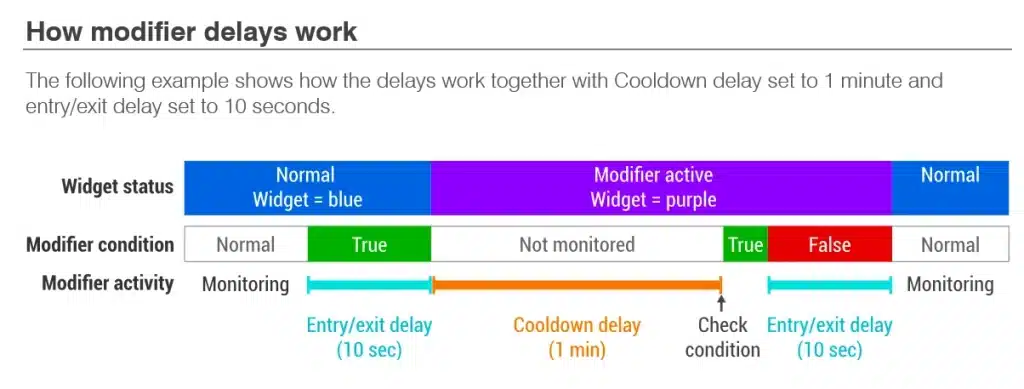
Secondary modifiers include timing features that help maintain stable operation:
- Entry and exit delays ensure a condition must remain consistent before the system responds
- Cooldown delays prevent equipment from cycling on and off too quickly
These features help reduce unnecessary adjustments and protect equipment from excessive wear.
What this changes day to day
When the system responds to conditions instead of waiting for temperature, daily management becomes more consistent.
This results in less need to adjust fans or ventilation manually, more stable conditions throughout the day, and better control during sudden weather changes.
Instead of reacting after issues appear, the system works to prevent them from developing.
Do modifiers make the system more complicated
This is a common concern, but in practice, modifiers simplify day-to-day operation.
Once set, they run in the background. The system continuously monitors conditions and adjusts equipment automatically.
Rather than adding more to manage, modifiers reduce how often you need to step in and make adjustments.
From reacting to staying ahead
Barn conditions are influenced by more than temperature. Moisture, air quality, and airflow are constantly changing.
Secondary modifiers allow the control system to respond to those changes as they happen.
Instead of waiting for temperature to signal a problem, the system acts on the conditions that cause it.
That shift allows producers to maintain more consistent environments, improve animal comfort, and reduce manual intervention when conditions change quickly.
FAQs
What are secondary modifiers in barn control systems?
Secondary modifiers are rules that allow the system to adjust equipment automatically based on conditions like humidity, air quality, or pressure.
How do modifiers respond to humidity in a poultry or swine barn?
When humidity rises above a set range, modifiers can increase fan speed or ventilation to remove moisture earlier.
Can ventilation increase without a temperature change?
Yes. Modifiers allow the system to increase ventilation based on conditions like humidity or gas levels, even if temperature remains stable.
How do modifiers improve air quality in livestock barns?
They allow the system to respond directly to rising CO₂ or ammonia levels, increasing ventilation before conditions worsen.
Do modifiers make barn control systems harder to manage?
No. Once configured, they run automatically and reduce the need for manual adjustments.
Can modifiers adjust fan speed automatically?
Yes. Modifiers can increase or decrease fan speed based on changing conditions, either in steps or gradually.
What is the benefit of responding to conditions instead of temperature?
It allows the system to act earlier, helping prevent moisture buildup, air quality issues, and inconsistent barn conditions.